

10 Essential Bali Build Design Ideas for a Successful Villa
22 September 2026
Bali Villa Design Ideas for a Beautiful Tropical Home
22 September 2026

Powerful Ideas to Make Your Bali Villa Construction Stand Out
Building a villa in Bali is rarely as simple as choosing a design online and handing it to a builder. Land conditions can change from one plot to another, tropical rain puts constant pressure on roofs and drainage, and a design that looks perfect on paper may work differently once construction begins.
These are some of the questions that come up when planning a villa construction in Bali. What should the villa feel like to live in? Which contractor can manage the project properly? How can the design reflect Bali without looking like a copy of another tropical villa?
There is no single formula for every property. However, several principles can help create a villa that is practical, comfortable, and suited to its location. Here are seven ideas worth considering before construction begins.
7 Ideas for a Successful Villa Construction in Bali
1. Start With a Clear Concept and Function
Before choosing materials, furniture, or finishes, define what the villa needs to do. A property intended for personal use will have different priorities from a villa designed for rental income. Likewise, a compact one-bedroom retreat requires a different layout from a larger family villa or multi-villa development.
Defining the purpose early influences almost every decision that follows. It affects room sizes, circulation, privacy, outdoor areas, storage, and the relationship between shared and private spaces.
For a villa construction in Bali project, consider these questions before the design stage:
- Who will use the villa, and how often?
- Will the property accommodate guests, staff, or rental visitors?
- How much privacy is required?
- Should the atmosphere feel open and social or quiet and private?
- Which spaces are essential for everyday use?
A clear concept gives the architect and builder a practical direction from the beginning.
2. Blend the Design With Bali’s Natural and Cultural Character
Bali has a distinctive architectural tradition shaped by climate, culture, landscape, and community life. Open-sided pavilions, courtyards, natural materials, and connections between indoor and outdoor spaces can all provide useful inspiration.
A contemporary villa does not need to look traditionally Balinese. Instead, the design can borrow selected elements while maintaining a modern aesthetic.
For example, a project might incorporate a locally inspired roof form, natural stone, timber details, an internal garden, or an open pavilion while using modern layouts and facilities elsewhere.
The important point is context. A successful villa should respond to its surroundings rather than look as though it could have been built anywhere in the world.
This approach can make villa construction in Bali feel more connected to the landscape while still meeting the owner’s practical requirements.
3. Plan the Layout to Maximize Space and Airflow
Bali’s tropical climate makes airflow an important part of villa design. Cross-ventilation, appropriate openings, shaded areas, and generous roof overhangs can improve comfort and reduce dependence on air conditioning.
The layout should also respond to the characteristics of the land. Slope, drainage, sunlight, prevailing wind, views, and access can all influence where the main building, bedrooms, swimming pool, and outdoor living areas should be positioned.
For example, placing living spaces toward a desirable view may sound obvious, but the decision also needs to consider afternoon heat, wind direction, privacy, and rain exposure.
This is one reason an experienced villa contractor in Bali can be valuable. Local knowledge can help identify site conditions that may not be obvious from a basic floor plan.
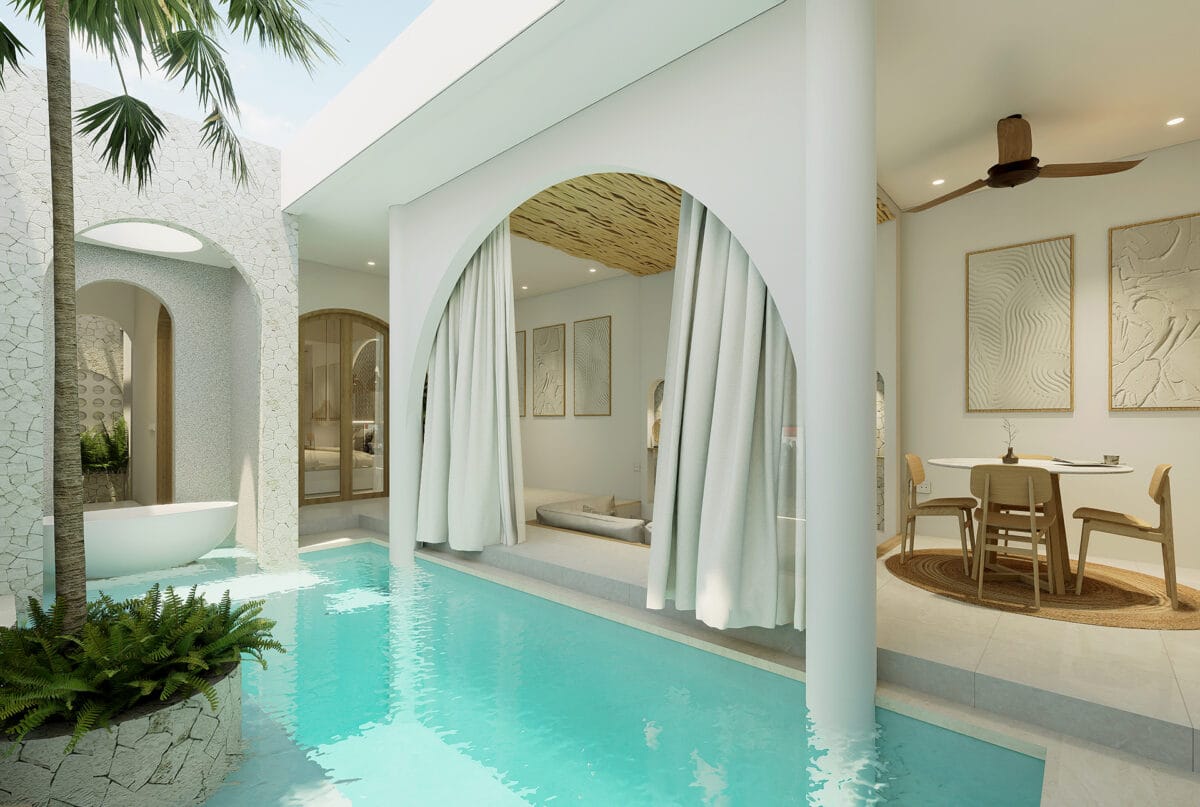
Powerful villa construction in Bali | balinesiaconstruction.com
4. Choose Materials Suited to Bali’s Climate
Materials have to perform in conditions that include heat, humidity, strong sunlight, and heavy tropical rainfall. A product that performs well in a dry or cool climate may require different treatment or maintenance in Bali.
Material selection for luxury villa construction in Bali should consider several factors:
- Resistance to humidity and UV exposure
- Performance during heavy rainfall
- Availability in Bali
- Local craftsmanship and installation requirements
- Long-term maintenance
- How the material will age visually
This does not mean every project needs to use only local materials. Imported and premium materials can also be appropriate when their performance is suitable for the environment.
The key is to understand how each material will behave before using it for important elements such as roofing, facades, bathrooms, terraces, decks, or outdoor furniture.
5. Prioritize Construction Quality Over Shortcuts
Some of the most important parts of a villa are not immediately visible. Waterproofing, foundations, structural reinforcement, drainage, electrical systems, and plumbing all play a major role in the long-term performance of a building.
Cutting costs in these areas can create problems later. Leaks, cracks, drainage failures, and moisture-related damage can be considerably more expensive to address after a villa has been completed.
For this reason, construction quality should be considered alongside the appearance of the finished property.
A reliable Bali villa contractor should be able to explain where costs can reasonably be controlled and where quality should not be compromised. Clear communication about construction methods and materials can also help the owner understand what they are paying for.
6. Control the Budget From the Planning Stage
Budget overruns often develop gradually rather than coming from one major mistake. Late design changes, unclear scopes of work, material substitutions, and additional construction requirements can all increase the final cost.
For anyone planning villa construction in Bali, establishing a realistic budget early is therefore important.
The budget should consider more than the basic construction price. Depending on the project, owners may also need to account for design fees, engineering, permits, landscaping, swimming pools, interior finishes, furniture, utilities, and other project requirements.
It is also important to understand exactly what a contractor’s quotation includes. Two estimates may look similar at first but cover very different scopes of work.
A detailed discussion with the construction team before work begins can reduce misunderstandings and make later financial decisions easier.
7. Work With an Experienced Design and Build Team
A villa project may involve architects, engineers, interior designers, contractors, suppliers, and specialist trades. When these parties work separately, communication between design and construction can become more complicated.
A villa design and build in Bali approach combines design and construction coordination within one integrated process. This can help ensure that design decisions are considered alongside construction methods, material availability, and site conditions.
This approach can be particularly useful for overseas owners who are not based in Indonesia throughout the construction process.
Balinesia Construction works across architecture, design, and general construction for villas, residential properties, and commercial buildings in Bali. An integrated team can provide a more coordinated process from the initial concept through construction.
How to Choose a Bali Villa Construction Company
The seven ideas above are only useful when the right team can execute them properly. Choosing a Bali villa construction company should therefore involve more than looking at photographs of completed projects.
Before appointing a contractor, consider asking:
- How much experience does the company have with similar villa projects?
- Has the team worked on comparable land conditions?
- How are design changes handled during construction?
- How frequently will the owner receive project updates?
- Who coordinates architects, engineers, suppliers, and site workers?
- What is included in the construction quotation?
- How are unexpected site conditions managed?
Communication and project management can be just as important as the visual quality of a contractor’s portfolio.
A company that understands Bali’s climate, construction environment, materials, and site conditions can help identify potential issues before they become expensive problems.
Ready to Plan Your Villa in Bali?
Planning a villa requires more than choosing an attractive design. The site, climate, materials, budget, construction quality, and experience of the project team all influence the final result.
If you are considering villa construction in Bali, discussing your land, design goals, and budget with an experienced local team can help you understand the project before construction begins.
Balinesia Construction works across design and construction for residential and commercial projects in Bali, helping clients turn their ideas into practical spaces suited to the local environment.
Frequently Asked Questions About Villa Construction in Bali
What should I consider before starting villa construction in Bali?
Start by defining the villa’s purpose and understanding the site’s conditions. Slope, drainage, orientation, access, and climate can all influence the design and construction process.
How do I choose a villa contractor in Bali?
Look for a contractor with relevant experience, clear communication, transparent quotations, and a practical process for managing design changes and site coordination. Experience with similar land conditions can also be valuable.
How does villa design affect construction costs?
The layout, structural complexity, roof design, custom detailing, materials, and overall size can all affect construction costs. A design that responds to the site from the beginning can help reduce costly changes during construction.
What materials are suitable for villa construction in Bali?
Materials should be selected based on their ability to handle Bali’s heat, humidity, UV exposure, and heavy rainfall. Durability, local availability, installation requirements, and long-term maintenance should also be considered.
How important is a design and build approach?
A design and build approach can improve coordination between the design and construction stages. Having one team manage both areas can help reduce communication gaps and identify construction issues earlier.


