
Villa Construction Bali: 7 Proven Tips for a Successful Build
21 September 2026
10 Essential Bali Build Design Ideas for a Successful Villa
22 September 2026
Bali Interior Design 7 Smart Ideas for Beautiful Tropical Spaces
Renovating a villa or fitting out a new home in Bali involves more than choosing furniture and decorations. Bali interior design needs to respond to the island’s tropical climate, natural light, humidity, and open living concepts. Material selection, ventilation, furniture, and room layouts all influence how comfortable and practical a space will be.
For residential, villa, or commercial projects, early design decisions can affect the entire build. A well-planned interior design Bali approach can transform an ordinary layout into a space that feels comfortable, functional, and intentional.
What Makes Bali Interior Design Different
Interior design in Bali must respond to conditions that are different from those in many other regions. High humidity, seasonal rainfall, strong sunlight, and indoor-outdoor living all influence how a space should be designed.
A concept created for a dry climate may not work well in Bali without adjustments. Some types of wood can require additional protection, while certain fabrics may need careful consideration in humid environments. Good Bali interior design considers these factors from the beginning rather than treating them as problems later.
The relationship between the interior and surrounding landscape is also important. Large windows, shaded areas, natural ventilation, and outdoor living spaces can help create a stronger connection between the home and its tropical setting.
Why Bali Interior Design Matters Beyond Aesthetics
Interior design is not simply decoration added after a building is complete. It affects how people move through and use a space every day.
Layout and Space Planning
A practical layout makes a room easier to use. Room connections, circulation paths, storage areas, and the relationship between indoor and outdoor spaces should all be considered during the planning stage.
Many Bali homes and villas use semi-open layouts. Because of this, designers need to balance natural ventilation with privacy, comfort, and functionality.
Lighting Furniture and Materials
Lighting affects both atmosphere and functionality. Natural daylight can make a room feel spacious during the day, while carefully positioned artificial lighting can create a different mood at night.
Furniture should also match the scale of each room. Materials such as teak, stone, rattan, and natural fibers can complement a tropical setting, but each material has different maintenance requirements.
The same applies to colors. A palette that looks balanced under strong tropical daylight may appear different under artificial lighting. Testing materials and finishes in the actual space can therefore help avoid unwanted results.
Interior Design and Architecture
Interior design and architecture work closely together. Ceiling height, window positions, structural openings, electrical points, and plumbing can all affect the final interior.
Involving the designer early can reduce unnecessary changes later. It also gives the architect, contractor, and interior designer an opportunity to coordinate the overall concept before construction progresses too far.
Bali Interior Design Services
Bali interior design services can range from complete design development to smaller projects such as furniture selection or a single-room renovation.
Common services include:
- Space planning and layout concepts
- Material and finish selection
- Custom and built-in furniture design
- Lighting and fixture planning
- Styling and decoration
- Interior renovation planning
- Design coordination with contractors
Not every project requires a complete package. Some owners may only need help choosing materials, while others may want a designer to manage the interior concept from the initial idea through final styling.
Bali Villa Interior Design for Private and Holiday Properties
Bali villa interior design can be used for both private residences and holiday properties. However, each type of villa has different requirements.
A holiday villa usually needs durable materials, practical layouts, easy maintenance, and finishes that look attractive in photographs. The design also needs to consider frequent guest turnover and everyday wear.
A private villa can focus more heavily on personal preferences. Storage, furniture selection, privacy, and individual routines may become more important than creating a design specifically for rental guests.
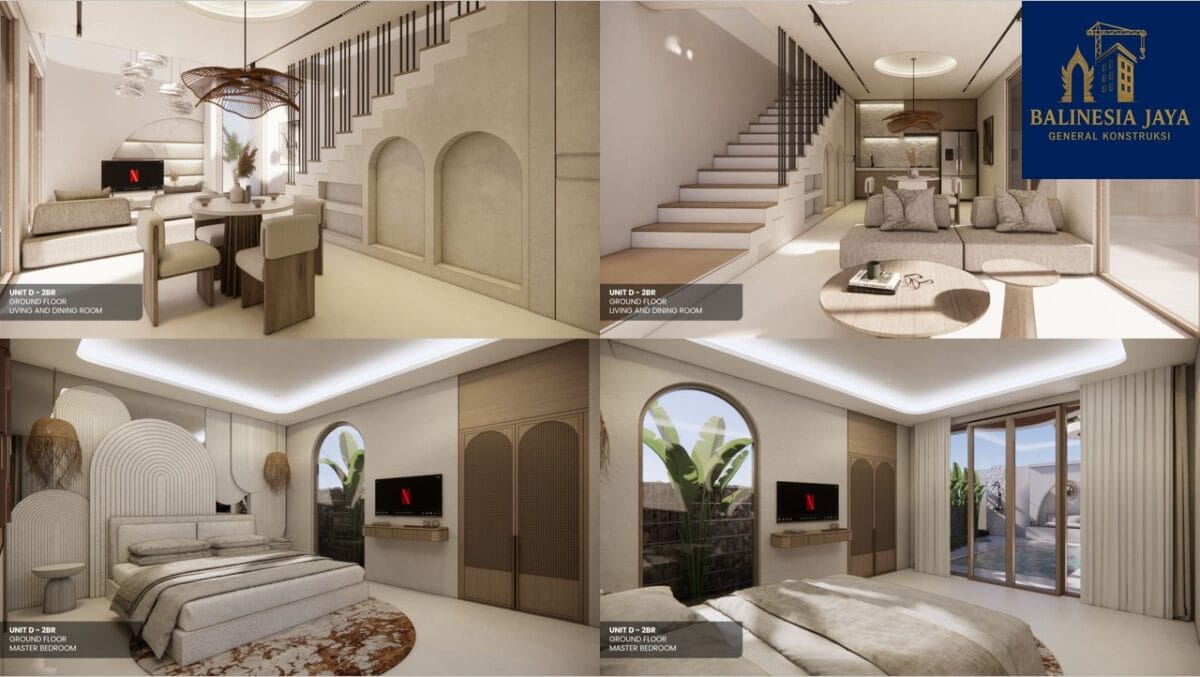
bali interior design | balinesiaconstruction.com
Bali Home Interior Design for Residential Spaces
Bali home interior design focuses on long-term comfort and everyday living. Storage, daily routines, family needs, and circulation often become more important than decorative details.
Residential homes, villas, hospitality properties, and commercial spaces all have different priorities. Understanding these differences helps designers create solutions that fit the actual purpose of the property.
Modern and Tropical Interior Design Bali Styles
Modern Interior Design Bali
Modern interior design Bali often combines clean lines and simple forms with natural materials. Teak, stone, rattan, and other natural textures can add warmth without making the space feel overly traditional.
This approach can create a contemporary interior while still reflecting the character of Bali. The key is to balance modern furniture and lighting with materials that suit the surrounding environment.
Tropical Interior Design Bali
Tropical interior design Bali focuses on natural materials, ventilation, daylight, and a strong connection with outdoor areas.
Large openings, natural textures, greenery, and shaded spaces can help create a relaxed atmosphere. Modern furniture and lighting can also be added to keep the design current and functional.
Luxury and Custom Interior Design Bali
Luxury Interior Design Bali
Luxury interior design Bali does not necessarily mean using more decoration. Instead, a premium interior often depends on proportion, material quality, craftsmanship, and attention to detail.
Joinery, hardware, lighting, stone selection, and furniture finishing can have a significant effect on the overall appearance. A carefully controlled design can create a sophisticated result without making the space feel excessive.
Custom Interior Design Bali
Custom interior design Bali is suitable for owners who have a specific concept, unusual layout, or special furniture requirements.
Built-in wardrobes, custom kitchens, feature walls, and specially designed furniture can be developed around the dimensions of the property. However, custom solutions usually require more planning and fabrication time than ready-made products.
Interior Renovation Bali What to Expect
Interior renovation Bali projects can involve more variables than new construction. Existing structures may differ from original drawings, while electrical, plumbing, and finishing conditions may only become clear after work begins.
For this reason, a site assessment should be completed before the final design and budget are confirmed. Identifying existing conditions early can help reduce unexpected changes during construction.
Renovation planning should also consider the sequence of work. Demolition, electrical changes, plumbing, flooring, carpentry, painting, and furniture installation may need to follow a specific order.
The Role of a Bali Interior Designer
A Bali interior designer helps translate an owner’s ideas into a design that can be built and used comfortably.
The role may include developing concepts, selecting materials, coordinating furniture, working with suppliers, and communicating with contractors. A designer may also need to adjust the original concept when site conditions or material availability change.
Clear communication is particularly important during this process. Regular updates can help owners understand design changes, material decisions, and project progress.
Things to Check Before Choosing a Bali Interior Designer
Before selecting a designer, consider several practical factors:
- Relevant portfolio and project experience
- Clear scope of work
- Material selection process
- Furniture and supplier coordination
- Budget transparency
- Project timeline
- Site supervision
- Communication process
A portfolio should be reviewed based on projects that are similar to the property being developed. For example, a villa renovation may require different experience from a small residential interior or commercial project.
Budget Timeline and Project Coordination
The cost of an interior project depends on several factors. These include the size of the space, design scope, material quality, furniture selection, and the amount of custom work required.
Timelines can also vary. New interiors may follow a more predictable process, while renovations can change once existing conditions are uncovered.
Coordination between the owner, designer, architect, contractor, and suppliers is therefore important. Material availability and delivery schedules can also affect the project timeline.
A design and build service can simplify this process by keeping design and construction under one coordinated workflow. For example, Balinesia Construction provides construction services for villa, residential, and commercial projects alongside interior design coordination.
Common Challenges in Bali Interior Projects
Interior projects in Bali can face several practical challenges. Material availability, transportation, site access, seasonal weather, and differences between existing conditions and original drawings can all affect progress.
A clear contract can help define the scope, budget, responsibilities, and expected timeline. Regular site supervision can also help identify issues before they become larger problems.
These steps cannot remove every project risk. However, they can make the process easier to manage and improve communication between everyone involved.
Conclusion
Choosing the right approach to Bali interior design starts before furniture and finishes are selected. A clear concept, realistic budget, defined scope, and suitable materials can create a stronger foundation for the project.
Climate, lighting, ventilation, and daily use should also be considered from the beginning. With proper planning and communication between the designer, architect, contractor, and suppliers, the interior can become both attractive and practical.
Whether you are planning a villa refresh, a new residential interior, or a complete renovation, early planning can help reduce unnecessary changes later. If you are considering an interior or design and build project in Bali, Balinesia Construction can help you discuss your requirements and plan the next stage of your project.
Frequently Asked Questions About Bali Interior Design
What does Bali interior design typically include?
Bali interior design can include space planning, material selection, furniture design, lighting, fixtures, and styling. The exact scope depends on the size and requirements of the project.
How much does interior design in Bali cost?
The cost depends on the size of the property, project scope, material quality, furniture selection, and amount of custom work. Defining the scope clearly at the beginning can help produce a more accurate estimate.
How long does an interior renovation take?
The timeline depends on the condition of the existing space and the amount of work required. Renovation projects can take longer when electrical, plumbing, structural, or finishing issues are discovered during construction.
How do I choose a Bali interior designer?
Review relevant portfolio projects and ask about the designer’s process for site assessment, material sourcing, budgeting, and project coordination. It is also important to understand the scope of work before the project begins.
Can interior design be combined with construction services?
Yes. A design and build approach can combine interior planning and construction within one coordinated process. This can simplify communication between the design team, contractor, suppliers, and property owner.


